

In aerospace manufacturing, a bracket is rarely “just a bracket.” A machined titanium support component may hold routing hardware, stabilize a structural assembly, or keep critical systems aligned through repeated vibration, temperature change, and flight-cycle loading. If that part begins with a poor cut, the risk follows it through every machining operation that comes next.
Consider a manufacturer producing near-net-shape blanks for titanium aerospace brackets from Ti-6Al-4V plate. The material is chosen because it delivers high strength with lower weight, but that same alloy is sensitive to heat during processing. Thermal cutting methods can create a heat-affected zone, where the microstructure at the cut edge changes before the part ever reaches final machining. In titanium, low thermal conductivity can make that problem more severe because heat concentrates instead of dissipating quickly.
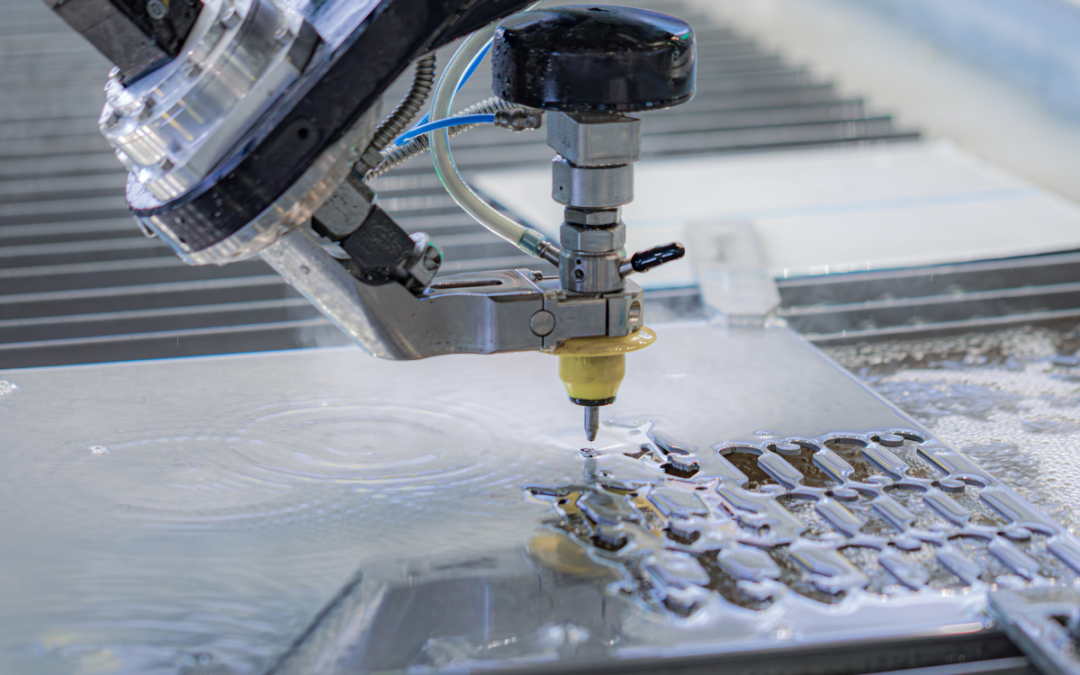
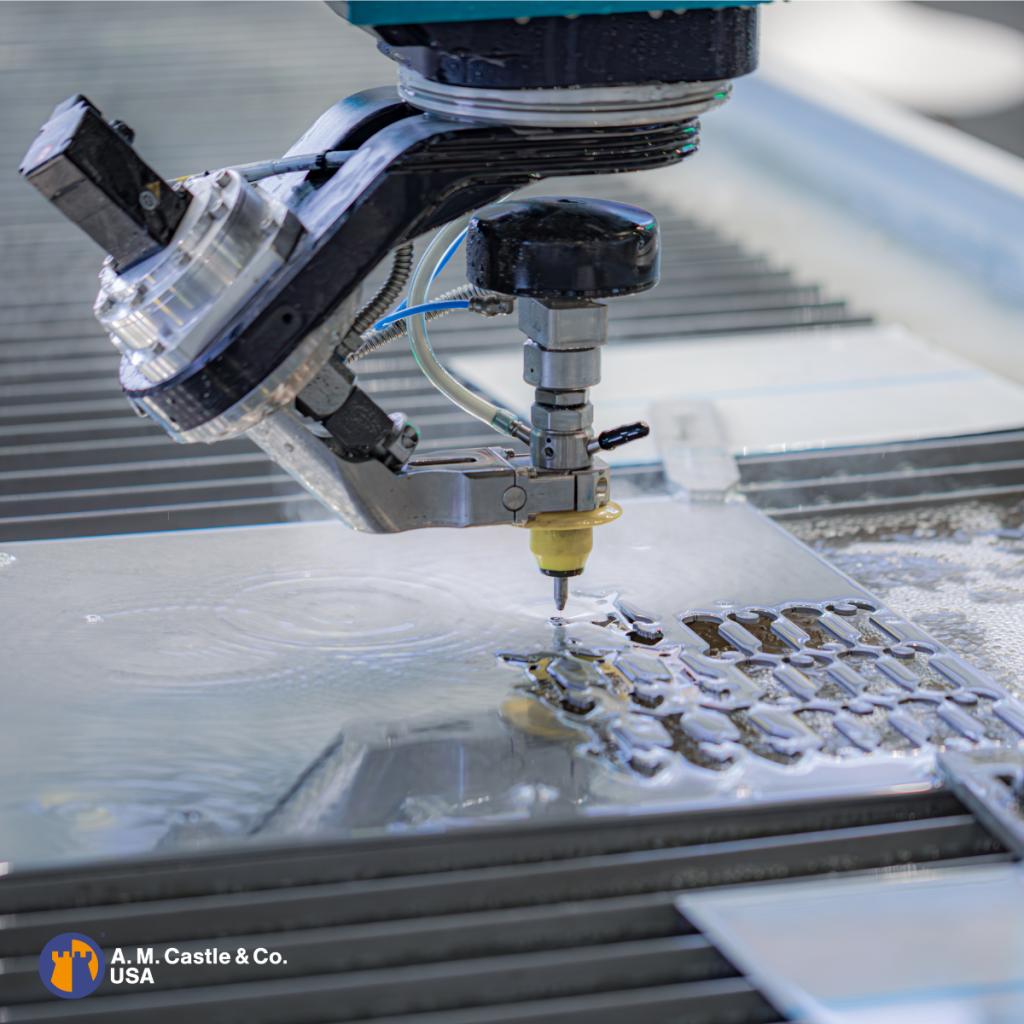
That is where abrasive waterjet cutting becomes essential. Instead of melting or burning through the material, waterjet cutting uses an ultra-high-pressure stream of water mixed with abrasive to erode the metal along the programmed path. Because it is a cold-cutting process, it avoids the heat distortion, edge hardening, recast layer, and thermal stress that can complicate titanium work. For a bracket blank with tight geometry, internal radii, and limited machining allowance, that matters.
The benefit is practical, not theoretical. A near-net waterjet blank can reduce the amount of titanium removed during CNC machining, helping conserve expensive material and shorten machine time. It can also support cleaner nesting on plate or sheet, which helps reduce scrap when multiple bracket profiles are cut from the same piece of stock. And because the cut edge is not thermally altered, the downstream team starts with material that is closer to its intended condition.
For buyers and engineers, the application raises an important sourcing question: are you only buying metal, or are you buying a starting point that makes the rest of production easier?
A. M. Castle & Co. supports manufacturers with metals that may be relevant to waterjet-cut applications, including aluminum, stainless steel, alloy steel, nickel alloys, and titanium, depending on project requirements and availability. For aerospace-style bracket work, titanium and high-strength aluminum are often part of the conversation because weight, strength, corrosion resistance, and dimensional stability all matter.
Waterjet cutting is not the answer for every part. But when heat cannot be allowed to change the edge, when material yield matters, and when a precision blank can make the next operation more predictable, it becomes a strategic choice. If your next project starts with demanding material and a geometry that leaves little room for error, start the conversation with a supplier that understands both the metal and the manufacturing challenge.
Explore material solutions and start your request at www.amcastle.com/USA.